Matt
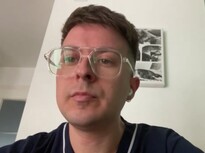
Matt is an organ donation nurse.
More about me...
Matt, an organ donation nurse, explains how to register.
Matt, an organ donation nurse, explains how to register.
Okay, so my name is Matthew Coli. I’m one of the organ donation nurses for the Northwest region.
In terms of the organ donor register, it’s a really powerful tool that in my experience, families feel a lot of comfort from knowing that their relative has made a decision on the organ donor register.
You can sign up to the organ donor register just by going on Google and searching organ donation register NHS, and that’s how you sign up in the uk.
You can also register a decision when you renew your driving license, uh, and very soon your passport as well.
Matt, an organ donation nurse, discusses organ donation.
Matt, an organ donation nurse, discusses organ donation.
So as well as registering a decision on the organ donor register, it is really important in my experience to speak to your family about organ donation.
Sometimes families are surprised that their relative has signed up to the organ donor register because it’s not something that’s discussed, and although they’re still willing to support that, in my experience, the best quality conversations are when someone has signed up for the organ donor register and also had a conversation with their family at some point, or their loved ones at some point, that this is what they want to do after they die.
These provide families with a lot more comfort in knowing that they’ve made the right choice for that.
Matt, an organ donation nurse, talks about deemed consent.
Matt, an organ donation nurse, talks about deemed consent.
So in my experience as an organ donation nurse, I’ve seen the law really help some families that are a little bit confused about what to do at that time. And the fact that someone has not opted out means that we assume that they would want to donate their organs and help other people.
And I have seen the law really help these families to come to that decision, because if they’ve not made a decision to opt out, then we can assume they do want to help other people.
And I think just on a sort of character basis for all of us, all of us would want to help someone if we could.
And what better way to help someone than by giving them your organs after you don’t need them anymore.
Matt, an organ donation nurse, talks about the role of the family.
Matt, an organ donation nurse, talks about the role of the family.
So in my experience as an organ donation nurse, families are absolutely integral to the work that we do.
And as part of the organ donation process, as well as the family being asked to support an organ donation decision, families do have to answer questions about, that patient’s medical history and to give us and to sign posters, um, to potentially other services that might have access so that we can assess if that patient is gonna be a safe organ donor or not.
The families often times do find it very challenging. We need to remember that these families are going to be in the acute bereavement stages and are gonna have a lot of emotions.
They’re gonna be on an intensive care unit that probably never been on before, and it’s my role to support that family through that journey.
And, if I may, the families are the best part of this job, in my opinion.
I’m just absolutely in awe of our donor families and their bravery and how wonderful they all are.
Matt, an organ donation nurse, explains why families decline.
Matt, an organ donation nurse, explains why families decline.
So in my experience in in this role, some families struggle with the timings of organ donation.
So as we’ve already mentioned, it comes at a time when families are feeling a lot of very heavy emotions, and they’re often very overwhelmed by that patient’s ICU journey and their hospital journey so far.
Sometimes it can be very rapid, it can be a few hours or days into that patient’s hospital admission, and that presents its own challenges and sometimes some families it’s, um, sort of weeks and months into their hospital admission, which can present exhaustion challenges.
The other challenge for families is the amount of time it takes to match organs to suitable recipients. This is something that we do so that we can ensure that high quality transplants go ahead, and that so that we can get a specialist service of really highly skilled surgeons. So at hospital, this can sometimes take time. They can be traveling from hours away. The bottom line is that’s so that that donor gets the best quality care and gets the best and gets the best outcome for those transplants.
So I do see families struggle with timings quite a lot, but that is something that I’m there with them on that journey. It’s normally one or two organization nurses in the process from start to finish that we’ll see this process through.
So we we’re there with you at the time as well.
Matt, an organ donation nurse, talks about ethnic minorities and organ donation.
Matt, an organ donation nurse, talks about ethnic minorities and organ donation.
So there are a lot of myths around organ donation and what organisation actually is and actually looks like.
I would guide people to the myth busting, webpage, which lays out actually what organ donation is.
When it comes to ethnic minority or religious groups that might disagree with organ donation, it’s really challenging because a lot of what they have learned is it just isn’t true and it isn’t how organ donation actually is and how it actually looks.
For me, I think within any culture, religion, charity is always seen in a very high regard.
And in my opinion, there’s no greater gift of charity than donating your organs to someone that you, after you them live their life.
And I think that’s just really powerful and something that we should all really reflect on.