

Carol
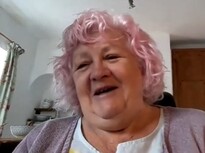
More about me...
Carol gives ideas for talking about and promoting organ donation.
Carol gives ideas for talking about and promoting organ donation.
I think people that have agreed for their own organs and people that have agreed for their loved ones organs to be donated, maybe they should be encouraged to talk to other people as well.
Maybe they could be given some little handouts, you know, if they’re in that right frame of mind, give these to your family. This is what your loved ones have been able to do and it’s such a good thing. And, you know, maybe they could do that. Obviously they’re not reaching a great number of people, but still every look at bit counts.
I know there are, you know, posters up in the health centre and things, but my health centre has a newsletter and they asked me if they could feature Susan in the newsletter. So I sent them some of the photographs from the St. John’s thing and they did a little article about Susan in there and that she’d given her her body parts. So, you know, if everybody could do something like that, every, I mean, I know the little GP’s where there’s only one or two doctors probably don’t have newsletters and things, but there are a lot of health centres.
Ours is a big one, and they all knew Susan well, they were very upset.
My own GP said to me later, she said, I was gonna ring you he says, ‘and I thought, no, I’ll cry. And I’ll make her cry.’ So he said, ‘I didn’t ring.’
I said ‘oh, you should have rung. Would’ve been alright, we’d have had a sob together.’
You know, I said, it’s okay. So they did know it. Whether they feature everybody in the newsletter that donates, maybe they should, but then people will get used to seeing the column and thinking, ‘oh yeah, it’s just donation thing. We don’t do that.’
You know, so maybe a story every, and, and again, you know, to peak their interest with a photograph because it’s local, so they think, well, do we know these people?
You know, so they, they’ll look and see. But yeah, what else you could do?
I am just not sure. I’m just not sure. It’s communication.
The whole thing is communication.
You know, but maybe go back to doing, um, TV advertisements now that, you know, COVID is done with, and things are clearer, whichever way they choose to do it.
Whether they go back to it not being a legal thing, you know, that it is just a gift or whether they stick with what they’ve got.
I don’t know. I suppose it’s a case of just trialing seeing, which seems to have some impression.
But I’m doing my best. I keep telling everybody, all my guys at the shoot, you know, you have to sign the register.
You are going to do it, aren’t you? ‘Yeah. Yeah, yeah. Yes, Carol’ Good. You know, I’m sat at work now, I run a team of interviewers and they’ve all been told, all my managers that I work with, they’ve all been told.
So, yeah. You know, I mean, we have a good laugh about it, but all you can do is tell people and let ’em know what’s involved.
And I maybe suppose that’s what we’ve just been doing, you know, with a name to showing them exactly what is involved.
Carol talks about being in ICU and care and the support she got.
Carol talks about being in ICU and care and the support she got.
Being in ICU was a weird experience.
It was like it was noisy, all full of machines around every bed, every bed and nurses up and down in Crocs, you know, making noises on the floor all the time.
But, you know, every bed was screened off, and she looked cared for. Her hair was all arranged nicely, and she looked cared for, and she looked loved by them.
Although, I’m sure you know, she was just one of hundreds and thousands that they deal with. But this certainly made me feel like Susan was special at that time, you know?
So yeah, in a way it was all okay.
And I remember after the funeral, which it, it took me two days before I thought, oh my God, I’ve got to organise a funeral. Never thought about funerals, you know, my mind was just taking up with, with doing all this and letting people know, letting all their friends know.
But the, the humanist that did our service turned out to be the father of, I don’t know what his title would be, but the person that was in charge of ICU.
So he said, what was your experience? So I told him, and he said, oh, I’m really glad it was a good experience. I said, it was, and he said, oh, I’ll tell him.
He says, I ask everybody ‘were you ICU?’ and I feed it back.
I said, oh, you’re doing a good job.
So I said, strangely enough, after funeral, I said I’ve really enjoyed it.
I’ve enjoyed that funeral. If she had to end. And for Susan, it was, there was gonna be an ending, whether that was by suicide or whether it was what happened.
It’s all been quite beautiful.
And it was, it was. There was nothing… alright, she died, but that’s separate to it. Everything else was, was nice.
Carol talks about the processes involved in retrieval and withdrawing treatment.
Carol talks about the processes involved in retrieval and withdrawing treatment.
I sat with Susan and then the transplant nurse came and said, are you all right now to come and talk to me about the transplants? I said, yes. Okay. So she took me away to a little room and made me yet another cup of tea, and she had one as well.
And we sat there. And so she, she told me a little bit about, um, what would happen in so much as, um, they would have to wait until they’ve matched her up with other people to see if they can, you know, donate heart, lungs, kidneys, and so on, matched them up.
So they would, they would allow a couple of days for that to happen. And then they would unplug the machine and she would need to die quite quickly after the machine was switched off, and they would expect that she would die quite quickly. But they, they said sometimes that doesn’t happen. And if it goes on for too long, I think it’s only a couple of hours. I can’t remember now. Yeah. Then they can’t use those body parts, so I assume they must deteriorate to some point.
Once that’s happened, she’ll be taken down to theater just as if she’s going for an operation as if she was alive, taken down to theater, and they would operate on her, take the parts that they, they can take. For Susan, they took her kidneys and they were matched. And two young women, both in the forties, each got a kidney.
They were going to take her, they took the heart, what are they called? Little bits that are in the heart. They took those. but the lungs, they took the lungs and then when they examined them afterwards, there were some lesions in and they think that at some point she could have developed lung cancer. She had been a smoker up to about seven years before that, so they couldn’t use those.
But she said, you know, that they will go through everything and they will, she’ll all be stitched back up again.
She’ll all be made to look like a proper body again, and then she’ll be brought back to the wood and then will, you know, make her look presentable, wash your hair and all the rest, which they did. And then you can come and see her again after that if you want to.
So then she started with the paperwork. So I thought I’d just be signing a document to say, yes, I agree that you can take all the bits you want, but it wasn’t like that at all.
So she went through it in, in order all the different body parts. Did I agree to this? Did I agree to that? So I had to sign every one. And then there was the bit about, yes, they can take some parts just for research to help, you know, find out more about diseases, things that kill us, things that make us very poorly.
So I said, yeah, I hadn’t realized that, but that’s a good thing as well. So I was quite happy for that. It probably, I don’t know, it probably took half an hour, something like that. But she was very patient and if I hadn’t quite grasped something, you know, I said, well, I’m sorry, just read that bit again.
So she would explain something, read it, and then I was signing all the documents after.
She was absolutely lovely.
And I met her again when we did the St. John’s Ambulance Award, and she came rushing over to and threw her arms around me. She was a wet rag by the end of the evening because she cried with everybody. At least we only cried once, you know, but she cried with everybody. But she, she was lovely.
And I think all the transplant nurses that were there on that night at that award ceremony, they were all chosen to do the job because they had that empathetic nature and a lot of understanding about how you are, how you were dealing with things.
They were caring for Susan, they were caring for you and helping you to deal with things. And I found that they just had that knowledge and that ability to help me get through. And I’m sure that’s, you know, that’s what they trained to do and they did a good job of it.
So it was nothing to be afraid of. It was a straightforward process, just a bit longer winded than I thought it would be. But yes, you know, they were absolutely great with that. And I didn’t have any more form filling in to do, anything else to agree to, anything else to sign. It was all done and dusted in that half hour.
And then, yeah, I could go sit back with Susan or go home, do what I wanted, and let them get on with things, which is what happened.
Carol describes the process of their daughter going into hospital & communicating death.
Carol describes the process of their daughter going into hospital & communicating death.
I think one of the issues that would be different now is this happened towards the end of Covid.
So, at the point that she died we were here at home. She was a big girl, very overweight, and a big tall girl.
She was upstairs on my bed and I sort of knew them and I remember saying to the Ambulance men as they were getting her belongings together, and I said, her handbags here. And he just said ‘she won’t been needing that love’, and I remember thinking, oh, okay.
She never went anywhere without a bag, but they couldn’t move her so they went to get another ambulance and then to get the fire brigade. And they moved all my furniture out of the way to make a clear passage. They had to get a special stretcher.
And I remember sitting in a corner of my living room because I couldn’t do anything. I was just in the way, there’s all these men in great big boots and other uniform fire, things, all the trooping around the house and up and downstairs. And I thought, oh my God, what’s happening?
My life sort of suddenly changed and eventually got her out and laid her on the pavement in the stretcher in her nickers and a t-shirt. And I thought, oh, she, she would be horrified, but eventually, you know, they said, right, we’ve got her out. Let’s get her to hospital. You can’t come.
So I already realised that I wasn’t gonna be able to, to go with them. So during the night, uh, well it took me an hour to put all my furniture back.
They’d ripped all my bedding off and threw it in the shower, which was wet. So I had to get that all in the washing machine. And then I got my bed all made up and I’m thinking, I’m going crazy. My daughter is dying in hospital and I’m making my bed up. But it, it also was part of how life goes on, you know, I needed, I need my bed. I needed to lie there even if I couldn’t sleep. And so I did all that and got into bed and I was just dozing off. And the phone rang at about half past one in the morning, and it was [PLACE] hospital. She’d been taken to [PLACE], and it was the surgeon explaining what had happened, that she had had this bleed on her brain.
The surgery was set up and ready and waiting for it, and they would ring me again as soon as. So got another call about half past five in the morning to say it was all done. It wasn’t quite as bad as they’d thought, but wasn’t looking, you know, very good. And they would ring me again the next afternoon. So that was Sunday.
Then, well, Sunday morning was clay pigeon shooting and I thought, I can’t sit here pace in the house. And all my friends, all my boys were shooting and they’ll wonder where I am if I’m not there marking the card. So I went down and I said to everybody, don’t be alarmed. Susan’s dying, you know, I can’t do anything about it. I’m here because you are gonna keep me going. And they were all a bit stunned. I said, oh, right, yeah, we’re not gonna talk about it. Let’s just carry on. So we carried on and everybody was just a bit quiet, so I jolly them along.
And I got through the morning and I got home and I sat here and then the phone rang again, can I come in? I said, right, okay. So I went into the hospital by about half two that afternoon. So they sat me in a room with about, I can’t know, the room seemed to be full. I think there were about three, four doctors and about five nurses. And one of them said, right, Susan has suffered this massive bleed. It’s done a lot of damage. And I think the words they used were, it is not survivable. So I said, right, okay. And I’d sort of come to that conclusion anyway, and I also didn’t want her to have had massive brain damage and live, you know, and be on machines for the rest of whatever you can call her life.
So I said, right, okay, you know, I can deal with that. She says, but it’s not survivable. I said, yes, yes, I understand. So then one of the doctors said, no, what we’re trying to say is she is going to die. I said, yes, I understand, I know what you’re telling me. Right. Okay. So they all got up and went out then, um, we’ll leave you with the, the nurses. So they took, do you want to go through? Yes. So I went and sat at Sue’s bed.
My first thoughts were that she was cold. And I told one of the nurses, they came and fell her hand as she a bit, so they put a blanket over her and I sat, held her hand, and I thought, she’s not here. When I held her hand there, it was ice cold, it was rigid, you couldn’t hold her. It was just rigid, and there was no life. They said, she can’t hear you, she can’t see you, she can’t feel you. She’s absolutely no recognition. She doesn’t know you’re there. And I thought, right, I didn’t feel her. The presence wasn’t there. She had gone, she was long gone.
And from Saturday night to having the bleed to that was Sunday afternoon, but then they turned the machines off onto Tuesday morning. I don’t feel like she was alive then. And I feel like she died here. And people say, what day did she die? And they always said, well, it was Saturday. Strictly come dancing was on, that’s when she died, you know, the rest of it.
She was just a body. There was nothing. She’d gone, you know, I sat and held out on the bed while we waited for the ambulance. And, I sort of felt a fading away then. And I prefer to think that that’s when she died and I was with her. So to see her then as she was immovable, immobile, no sensation to her face, just nothing.
Now, I think maybe that made agreeing to the transplant easier because it wasn’t my Susan having said all that, I remember watching a program, it was one of these about the coroner, but on this particular story, it was on a lady who died and her husband was there with her. And I thought, oh God. It was just like where Susan was in the ICU, but they never left her, they never left her side until they took her down to have transplant.
And I thought I couldn’t have done that. But everybody’s different, you know, she had all her family all sat there and they ended up talking about the football and having a coffee and, you know, round her bed. And I thought, what was the point? She, she, my Susan was gone long gone.
I did go back once more and I’d nearly five, ten minutes with her, but that was all.
Carol talks about if she had not known her daughters wishes.
Carol talks about if she had not known her daughters wishes.
It is hard to think if we’d never signed a register, say, and Susan was then, you know, and I was then asked, you know, do you want to do this? Then I suppose… I don’t remember. It’s hard to think because we wouldn’t have, we may not ne never discussed it, so if we’d never discussed it, we’d never signed a register. How would I have felt then when the law would say, yes, they can take these body parts. I have to agree and I, I could say absolutely no, but I, I, I think, I’d like to think I would still have gone ahead with that.
Yeah, I, I would’ve said yes, because obviously our frame of mind was that it, it was a good thing and we would do it. So I’m sure we, you know, we would both, if she could have been of that same mind under those circumstances, but I don’t know.
Carol discusses the consent and retrieval processes and benefits of organ donation in spite of the surgeries.
Carol discusses the consent and retrieval processes and benefits of organ donation in spite of the surgeries.
The nurse sat me down, the transplant nurse sat me down with a cup of tea in a little quiet room, and I was surprised at the amount of paperwork, but we went through it, you know, with another cup of tea.
It was sort of going through every single organ. Was I happy for them to take her eyes? Yes. Her skin, yes, her heart, you know, and we went, so yeah, we got through that quite well.
I only had a, a snivel once, the nurse said that I was the easiest one she’d ever dealt with, but maybe, you know, I’ve managed to compartmentalise things and knew I just wanted to get through this and do this for Susan.
It was what she would’ve wanted. Yeah, I never gave it another thought after that.
And as far as the actual transplant, they ran me up that morning and said they’d unplug her. She had died very quickly then as they expected her to. And I knew that if she didn’t die within so many hours, they couldn’t use the organs. So I was like, willing to die. Just get on with it, Sue, you know, don’t hang around. And then this is wrap. We’re taking it down now.
We, it was a full theater, proper operation. So we did all that and then this, right. We brought her back. We’re going to go and give her a bath now.
We wash her hair. So I thought, oh, oh, that’s lovely. So then they ran me up.
She had very long, a lot of hair like this. Not pink, but a lot of hair, very long. And I remember them ringing me up and saying, right, she’s beautiful now. But, oh my God, the trouble we had getting through all the, the knots in her hair after all she’s been through over the last few days, you know, but we’ve done her best.
And they’d shaved all hair at one side because she’d had a brain hemorrhage. So they’d, they’d done brain surgery. She says, but we’ve covered it all over. We’ve made it look pretty, you know, so I said, right. That’s absolutely fine. Thank you. And that was, that was the end of it.
I was very glad that we’d done it. Glad we’d talked about it previously, because I didn’t have any doubts. I didn’t have to debate within myself, which was the last thing I would’ve wanted to do at that moment. So it’s a good idea. It’s a good idea to talk about it.
Since then, I’ve talked to my family and my sister had always said, oh, absolutely not. No, I couldn’t, I couldn’t be doing with anybody messing around with me or my girls.
And so it’s not messing around. It’s, it’s surgery, it’s clean and clinical and surgery, and these dead people are treasured and looked after. So I said, well, maybe I will. And she has changed her mind and come around to it.
She says, ‘but they can’t have my eyes’. I said, ‘well, they don’t have to have your eyes’. You know, you can pick each individual body bit. She said, ‘well, that’s my soul. It’s the eyes to my soul’. So I said, ‘well, if that’s what you think, you can keep your eyes, you know, nobody will argue about that’. So keep your eyes, but let’s get the rest doing some good.
So that was the end of our story. Susan was awarded the medal from St. John’s. So we were invited to, the county hall in Preston with about another, about 25 families. And we were presented with a medal for, which was lovely. I enjoyed that. So that was the end of it.
But it never is, you know, these people are always with us daily, but, and I think for us, less of her physically, she’s still the whole Susan, you know.
Susan and Carol discussed and signed the organ donation register.
Susan and Carol discussed and signed the organ donation register.
Okay, so my name is Carol. I had a daughter called Susan. Susan had been ill for about seven years, and then suddenly died, as sudden as that, nothing related to her illness, so it was a complete shock.
Having said that, her illness meant she was never gonna get better, and she was very depressed about that. And we had discussed suicide. So I think the fact that she died, made it easier to accept because in a way it was a bit of a blessing.
But previous to that, I’d signed the donor register, and it’s a long while ago. I can’t really remember why. I thought it was a good idea, but it wasn’t anything I’d debated about. I’d always donated blood, and so it just seemed like the next thing to do.
So I discussed it with Susan and she said, oh, well, you know, I’ll do it. Okay. So we had both signed.
So at the point where she had died, she was still plugged into all the machines and the nurses and it was the last thought on my mind at that moment. But the nurses said, you know, are you aware that Susan has signed the donor register? Oh yeah, of course. Yes. I’ve forgotten. But yes, she had. And are you happy for that to go ahead? Yeah, absolutely.
So I don’t have a big family. I have my son. At that time he would’ve been about 47 and our sister and her family, I’d informed them that Susan was going to die at that point, she was being kept alive, but, you know, she wasn’t gonna last.
I didn’t feel the need to discuss with them our decision, because Susan and I talked about it over the years, that it was a good thing.
You know, things pop up on TV and then plays and programs and documentaries and it’s something we talked about. We, she and I watching the emergency programs and all the documentaries about hospitals and so on. So it was something that was sort of fresh in our minds.
So, yeah, I just went ahead with it.
Carol discusses the legacy and celebration of organ donation.
Carol discusses the legacy and celebration of organ donation.
And, you know, going to the, the service. Well, I didn’t go to the service afterwards for the St. John’s thing. I decided that was too soon. It was only about four months after. And I didn’t want to cope with that. I was doing really well and I didn’t want to be upset. What was the point? You know?
But then later on they arranged this, this get together for receiving the St. John’s medal for those that are given body organs. And I did go to that and initially it was a bit upsetting.
I remember feeling a bit choked up and thinking, I went to the ladies and I stood front of the mirror and I thought, come on, pull yourself together, girl. You’ve got your best dress on. It’s a beautiful day. It’s sunshine. And they’ve got a fantastic spread on for a buffet. We didn’t know we were gonna be fed.
And in many parts, it was funny, we had a man, he was, I think he was the head of St. John’s in the northwest. He was an elderly man, and he talked to us about, you know, how wonderful this gift was that she’d given and, uh, all the other people and everything. And I can’t remember the song now. There’s a, a song, a very emotional, romantic song. And he started talking the words. It was the funniest thing I’ve ever heard.
And we had another family on our table. There were three daughters, and mom and their father had died. And the daughters were all in, uh, the best clubbing gear, skin tight, body con dresses, stiletto heels, all the makeup, the hair, you know, it was hilarious.
And there was free drink. So they were backwards and forwards, getting gases of champagne saying to me, do you want another one? I said, I’m alright, thank you. He said, oh, it’s free. It’s free. Come on. Oh God. It was so funny.
When this man starts speak the words to this song, it all seemed so inappropriate. And I caught the eye of one of these girls sat to cross from me. Oh. With tears rolling down her face for all the wrong reasons, you know?
So, yeah. And then as, as hilarious as that was, the next time they would cut, they came round to then give out the medals. So they were calling out the name Susan Parker. Yeah, that’s me. So they’d come to our table and they’d, they’d give me this and shook me hand and gave me a certificate and everything. So they’d going round and it’s like Mary Smith, and this little, little man would stand up and he’d all be on his own. And I thought, oh, bless him. And then it was like Joan Brown and another little, there were three little old men, they strict to stand. They Must have been in their eighties, man, I’m in the seventies, but they look like old men.
And it just seemed heartbreaking for them, even though their wives were obviously elderly and had reached the end of their life. The fact that Susan reached the end of hers at 44 should have been more tragic. But somehow it didn’t seem that way.
And I, I think we all went a bit quiet when these old men stood up all on their own. Where, where were the families? Why had they not come? You know, it was, it was a bit sad then. But on the whole, the whole experience I found memorable in all the right ways. So.