

Kadri
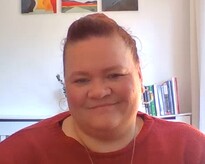
Towards the end of her pregnancy, Kadri developed high blood pressure which she needed medication to control. Her labour and birth went well, and her daughter was born healthy though smaller than expected. The early months after giving birth were challenging. Kadri felt exhausted and her mental health was negatively impacted. Kadri also felt some healthcare professionals made discriminatory assumptions about her because of her larger body weight, which undermined her care and her trust in them.
Kadri is a 34-year-old woman who lives with her husband and their three-year-old daughter. She is originally from Estonia, has settled status in the UK and identifies as White European. She is self-employed as a psychotherapist.
More about me...
Kadri’s pregnancy was straightforward until 37 weeks, when she was found to have high blood pressure during a routine antenatal appointment. She was encouraged to have an induction of labour; however, Kadri was initially unsure about this as she had no other signs of pre-eclampsia. She agreed to monitor her blood pressure and urine at home, but the blood pressure cuff she was given was too small, causing her to have falsely high readings. A properly sized cuff wasn’t available, so Kadri had to go into hospital every couple of days to be monitored.
At 38 weeks, Kadri was started on labetalol (a blood pressure medication) and soon after experienced a burning pain in her nipples. Her doctor initially didn’t think it was related to the medication until Kadri showed him a medical journal article she’d found confirming that this was a potential side-effect. Her medication was changed, and the pain went away. Kadri ended up going into labour naturally on the day she was meant to be induced.
Kadri's labour went smoothly, and her daughter was born healthy, although she was small for her gestational age. Kadri found the hospital environment stressful and struggled to rest, so she was keen to go home. Her doctors wanted her to stay longer because they were concerned about her high blood pressure and increased her medication twice. However, it was later discovered that the blood pressure cuff being used was too small, resulting in falsely high readings. The paediatrician was also reluctant to discharge Kadri and her baby because of concerns about her daughter's weight and advised her to use formula alongside breastfeeding. Kadri found this upsetting, although she ultimately chose to combine breast and formula feeding.
Kadri's daughter was very unsettled for the first several months, she cried frequently and struggled with reflux. She was eventually diagnosed with a cow's milk allergy and tongue tie, and Kadri felt frustrated that these problems had not been identified sooner. At eight months, her daughter was switched to a different formula, which eased her symptoms.
The difficult early months left Kadri feeling exhausted and anxious. She started having panic attacks and her anxiety prevented her from enjoying maternity leave the way she had imagined. It was only in hindsight that she appreciated just how difficult that period had been. She eventually had counselling, which helped, though she had to pay for privately for this.
Kadri found it difficult to speak up for herself and challenge healthcare advice that she wasn’t happy with. She felt vulnerable and was worried about upsetting her healthcare providers and the impact this might have on her care. She felt there was too much focus on her weight and that people made unfair assumptions about her lifestyle. She thinks she was automatically labelled as high risk because of her body size, which led to choices being taken away from her. She was given unsolicited weight loss advice without being asked about her eating habits or activity levels, even though she followed a nutritious diet. Kadri believes the stress of being judged and constantly having to defend herself may have made her blood pressure worse. She says there was one consultant though, who she felt saw beyond her weight. She said he treated her with kindness and respect, and supported her to make decisions about her care without making her feel judged.
Kadri has had negative experiences with dieting in the past. She knows that to reach the “ideal” weight expected by healthcare professionals would require her to follow an extremely restrictive routine that would take over her life, make it difficult to socialise, and have a negative impact on her mental health. Kadri believes that health advice should instead focus on supporting people to eat nutritious food and finding fun ways to exercise rather than weight loss. For Kadri, this includes swimming, cycling, and ice skating, which she associates with happy childhood memories, though factors such as cost, transport, and lack of childcare can make opportunities to exercise, more difficult to access.
Kadri’s past attempts at weight loss had negatively affected her mental wellbeing and she did not want to return to this after having a baby.
Kadri’s past attempts at weight loss had negatively affected her mental wellbeing and she did not want to return to this after having a baby.
You know, that stress on the... that stress on the body, dieting is stress on the body, and it doesn’t even work. And for me, it’s like, you know, doctors, would they recommend a medication that is proven to not be effective 95 percent of the times, but causes significant side effects? You know, the stress of dieting, physically and mentally, is enormous. The social isolation it can cause. You know, when I was in my dieting days, like, I couldn’t go out with my friends because I would have to think about, well what was actually, quote on quote: ‘safe for me to eat’, that wouldn’t mess up my diet plans. You know, I would be totally... like, my life would be totally ruled by what I could and couldn’t eat. My mental capacity was totally spent on planning my meals, and because I was hungry 90 percent of the time, I actually could not really think of much else.
Kadri thinks women should be informed about health risks and ways to reduce them, but that health promotion conversations should not centre on weight.
Kadri thinks women should be informed about health risks and ways to reduce them, but that health promotion conversations should not centre on weight.
So, for me, like, the weight management just needs to go out of it. You know, actually, how can we support people, even if they’re a higher weight, into movement? You know, how can we add nutrition into diets without talking about how to... you know, what needs to come out of it, or what needs to reduced? Like, there’s so many other ways of going about it, and how about we start talking about movement more in terms of joy and mental health, and, you know, running around the way that we did, like, when we were kids, you know, not a care in the world, just moving, because we wanted to move our body and because it brought us joy and enjoyment in itself.
Kadri felt pressured to formula feed her baby after she was classified as small for gestational age using a personalised growth chart that took Kadri’s body weight into account, which Kadri felt was unfair.
Kadri felt pressured to formula feed her baby after she was classified as small for gestational age using a personalised growth chart that took Kadri’s body weight into account, which Kadri felt was unfair.
She was just... she was small, but she was just over 3kg. And... and then this is again where... where... where my weight kind of comes into play because... So,... and... and I didn’t know this, is that they... they do like a personalised growth chart for the baby, when they’re... even during pregnancy, when they’re measuring you, and apparently if the mother is of a higher weight than they expect the baby to be of higher weight, that I don’t know what that’s really based on, and I actually even looked for research on this, and I couldn’t really find anything. I mean, my sources are limited, so... so maybe there... maybe there is. But, literally, only for this reason, they expected me to have... because of my weight, they expected my baby to be bigger than average at birth, and, actually, so when she ended up being smaller than average, the calculation came that... that she was, like, on, like, the, you know, third percentile, or something, so they were then very concerned about her weight, even though she wasn’t, like, that small. If you just looked at her compared to any other baby, she wasn’t really that small. And nobody had commented on any of that, or at least the midwives that saw us, you know, for two days on the... on the ward, you know, many of them... none of them, you know, seemed concerned, and she was doing fine. It was only until we were insisting on discharge and then were seen by this paediatrician who then said, “Oh, but she’s, you know, only on the third percentile,” and then was... then was raising a lot of concerns about making sure that she gains weight, and... and actually actively discouraged us from breastfeeding at the time because formula would somehow be magically better at her gaining weight, which I was really shocked about. But we were actually told that if we didn’t at least introduce formula on the... you know, as well as trying to continue breastfeeding, that she might die.
Yeah, that was... that was one of the most shocking sides of... of... of the whole process, probably. Yeah, so... yeah, I... I guess the paediatrician has to assess the... the baby before you can be discharged. And admitted that this was... I don’t know if this was a trainee or a junior doctor, or... or I don’t know, but, yeah, basically, they wanted to keep us in the hospital, so when they no longer could use my blood pressure as a reason, they then insisted that the baby is too small and they have to monitor the baby. Which was a bit funny because, I mean, nobody had actually really been monitoring the baby all this time and suddenly this was an issue. And then actually the... we were discharged at, like, 9pm and had a midwife appointment at another facility the following morning, anyway, so it’s like: ‘well, really, what monitoring would you have done in this, like, period anyway?’ So, it was very... very confusing. But, yeah, so they were essentially trying to get us to stay, and so that’s what they tried to then use to... yeah, that basically your baby will die if, you know, you’re not... if the feeding doesn’t, basically, go. And I was insisting on breastfeeding at that point, and actually they scared us enough that when we got home, my husband went straight to the store to get formula.